Marriage Laws in India. Indian marriages are more than just a union of two people; it’s an age-old practice, inseparable from culture and laws. Considering its large population, several types of marriages are present in the country with each type of marriage having different jurisdictions across the Indian society. Starting from the Hindu Marriage Act to Special Marriage Act, the legal system has provided different ways in which people who want to get married can do so, either through customary marriage or a civil marriage.
As such, people who wish to embark on this life-changing decision must appreciate the types of marriages there are and the legal marital rights they grant. In this article, we will examine various kinds of marriages in India and the corresponding laws that exist in relation to each of them, as well as the rights and responsibilities that come with every marital union, leaving the readers well-empowered to make the correct decisions in their marriages.
- 📘1. Hindu Marriage Law of 1955
- 📘 2. Muslim Marriage Law
- 📘 3. Christian Marriage Law, 1872
- 📘 4. Special Marriage Laws in India, 1954
- 📘 5. Parsi Marriage and Divorce Act, 1936
Indian Marriage Laws
Here’s a detailed overview of Indian Marriage Laws, covering the types of marriages recognised in India, the relevant legal frameworks, and the rights associated with each type.
Hindu Marriage Law of 1955

“The Hindu Marriage Act, 1955 is an important actuator of the law in India which relates to the marriages of the Hindus which also includes Buddhists, Jains, and Sikhs. The Hindu Marriage Act was enacted to, among others, legalize the institution of marriage and divorce.
” This act presses the monogamous family structure and reiterates that the minimum age for marriage shall be 21 for males, and 18 for females and both have to agree to the marriage. It also makes it clear that there are some degrees of relationships beyond which marriage is unlawful, and all marriages may be registered which facilitates legal proof.
Additionally, the act includes several reasons as to why marriage may cease to exist including infidelity, violence, abandonment, and a few special cases where the marriage can be dissolved by a court order. Marriage renders considerable advantages to wives as it reinforces alimony and maintenance rights which in turn helps bring about the equality of the sexes, alimony support, and inheritance for women.
Because of all of the aforementioned factors, the Hindu Marriage Act not only provides power and status to Indian women, but it also helps encourage social change in a way that removes undesirable traditions such as polygamy while also clarifying legal issues surrounding marriage in a way that is easily understood.
Most importantly, it has made substantial contributions towards the movement for social justice amongst families and the Indian diaspora at large, so much so that every individual wishing to marry needs to understand what is required from them and the rights that they are afforded within this law.
🏛️ 1. Hindu Marriage Act, 1955
✅ Applicability:
- Hindus, Buddhists, Jains, and Sikhs (not Christians, Muslims, Parsis, or Jews).
📜 Key Provisions:
- Section 5 – Conditions for valid marriage:
- Neither party has a living spouse (monogamy).
- Age: 21 (male), 18 (female).
- Soundness of mind and capable of giving valid consent.
- Not within prohibited degrees unless custom permits.
- Section 7 – Ceremonies:
- Marriage must be performed as per customary rites. Saptapadi (7 steps) is essential.
- Section 13 – Grounds for Divorce:
- Cruelty, desertion (2+ years), adultery, conversion, mental disorder, venereal disease, renunciation of the world, presumption of death.
- Section 9 & 10 – Restitution of conjugal rights & judicial separation.
- Sections 24–25 – Maintenance and alimony.
⚖️ Important Case:
🔹 Shastri Yagnapurushdasji v. Muldas Bhudardas Vaishya (1966)
- Held that Hindus include Buddhists, Jains, and Sikhs for the purpose of Hindu law.
🔹 Naveen Kohli v. Neelu Kohli (2006)
- The Supreme Court observed that irretrievable breakdown of marriage should be included as a ground for divorce under Hindu Marriage Act.
Muslim Marriage Law

In India, the marriage of Muslims is regulated by the Muslim Personal Law (Shariat) Application Act of 1937 which is derived from Islamic principles. Basically, this law revolves around the Tender ‘Nikah’ which is a marriage contract that requires mutual consent and witnesses.
The law recognises polygamy, allowing a Muslim male to have up to four wives under certain terms, but insists that all wives should be treated equally. The marriageable age for females in these cases is typically referred to as 18 years although it may change according to the customs of particular communities.
The law also appreciates Mahr, which is said to be an obligatory payment given by the husband to the wife on marriage insuring the financial security of the wife. Under Muslim law divorce proceedings can be commenced by either spouse and provision is made for Talaq and Khula.
The general provision in The Muslim Marriage Law takes into account both the consent of the parties and the interest of the family in order to secure the dignity and the rights of women with regard to the religion. All in all the Islamic legal system in India provides a helpful framework for the marital relationships of Muslims, by regulating the private sphere within the requirements of the divine law.
🕌 2. Muslim Marriage Laws
✅ Governed by:
- Muslim Personal Law (Shariat) Application Act, 1937
- Dissolution of Muslim Marriages Act, 1939
📜 Key Concepts:
- Nikah (Marriage):
- A civil contract.
- Requires offer & acceptance in presence of witnesses.
- Dower (Mahr) must be specified.
- Polygamy: Allowed up to 4 wives for a man.
- Dissolution:
- Talaq (by husband)
- Talaq-e-Biddat (instant triple talaq) – now banned
- Khula (divorce by wife with husband’s consent)
- Mubarat (mutual divorce)
- Faskh (annulment by court)
⚖️ Important Cases:
🔹 Shayara Bano v. Union of India (2017)
- Declared triple talaq unconstitutional.
- Led to The Muslim Women (Protection of Rights on Marriage) Act, 2019, criminalizing it.
🔹 Daniel Latifi v. Union of India (2001)
Held that Muslim women are entitled to reasonable and fair provision beyond the iddat period (interpreted from Shah Bano case).
Christian Marriage Law, 1872

The Christian Marriage Act of 1872 is an enactment in India for Christians concerning the ceremonies of marriage and its registration. Such an act was passed primarily for the reason of enabling the Christians to make their marriages legal and therefore it could be regarded by the laws.
In terms of the provisions of this act, marriage is solemnized by a licensed clergyman or a minister hailing from some religious order, hence, the marriage must be by the traditions of Christians. It is a requirement for a minimum of two witnesses to be present during the solemnization of the marriage to make it legal.
Next, one of the most important advantages of the Christian Marriage Act is that marriages are registered after solemnization. For, when couples get married, they must go and have their new union registered with the church of their choice and a document confirming such a marriage is given to them.
This registration is important because it allows the marriage to be recognized officially and therefore, the married couple can be able to exercise their matrimonial rights regarding inheritance, property, and maintenance. It is also possible to record the fact of the taking of the parentage, and the act emphasizes the relevance of record-keeping in marital relationships, which guarantees additional protection to the couples in the law.
The act does not merely focus on the solemnization of marriages but also extends its provisions for the dissolution of marriages of Christians in India as explained through the provisions of the Indian Divorce Act, 1869. The grounds include voluntary sexual intercourse with another person, infliction of physical or mental pain, and ignoring the other partner.
This is also combined with provisions for judicial separation. Since 1872 the Christian Marriage Act has served a more than legal purpose – it has served a moral base around which marriage and divorce regulation in the Christian community in India, providing family protection and safeguarding individual liberties consistent with Christianity.
✝️ 3. Christian Marriage Act, 1872 & Indian Divorce Act, 1869
✅ Applicability:
- Christians (both parties must be Christian)
📜 Key Points:
- Age: 21 (male), 18 (female)
- Performed by priest/minister or licensed person.
- Grounds for divorce include:
- Adultery
- Cruelty
- Desertion
- Mental illness
- Conversion to another religion
⚖️ Important Case:
🔹 Ammini E.J. v. Union of India (1995)
- Struck down Section 10 of the Indian Divorce Act, which allowed divorce only to Christian husbands on adultery. Extended equal rights to wives.
Special Marriage Laws in India, 1954
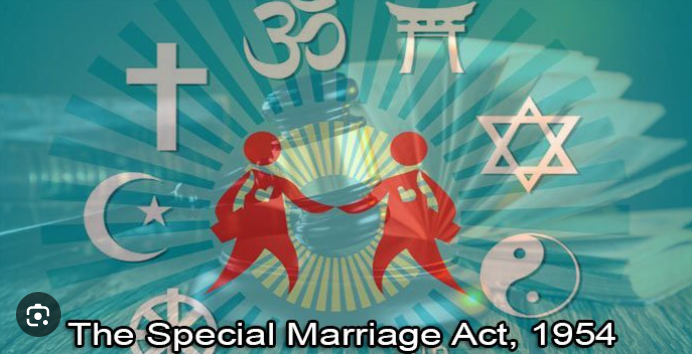
The Special Marriage Act of 1954 is perhaps the first important legislation in India which provides a legal sanctity for a marriage and its solemnization or registration for people of different religions or the parties opting out of the custom to marriage in their own communities.
This act becomes even more relevant in India where the number of inter-community marriages has grown over the years. It empowers couples to choose for a civil marriage, which by default has a legal guarantee protecting their rights and offering their legal recognition.
A further important aspect of the Special Marriage Act is that the marriage must be registered with the designated department. Those couples who wish to get married shall deliver to the Marriage Registrar a notice of their intention to marry which is published in public for 30 days.
The 30 days notice period is aimed at allowing the members of the community to voice any concerns they may have against the couple getting married. The act further states that the male has to be at least 21 and female at 18 years old in order to be able to get married which is consistent with the various other marriage acts in India so as to ensure the protection of children.
The act also specifies the reasons for divorce, permitting either spouse to apply for the termination of marriage on grounds of infidelity, abuse, or abandonment. Also, under the Special Marriage Act, there are provisions for maintenance and wife’s or husband’s support, thus providing for the economic dependence of the spouses in the case of a marriage breakdown.
Everything considered, in the context of the equality and justice in marriage, the Special Marriage Act of 1954 assists those couples who want to get married across the borders of religion and culture without losing their legal rights.
🇮🇳 4. Special Marriage Act, 1954 (For Civil Marriage)
Applicability: All Indian citizens, regardless of religion
✅ Conditions:
- Age: 21 (male), 18 (female)
- Free and sound consent
- Monogamy
- Not within prohibited degrees
- 30-day public notice before marriage
🔎 Features:
- No religious ceremony required
- Marriage registered by a Marriage Officer
- Provides uniform divorce, alimony, and maintenance rights
📌 Case: Sarla Mudgal v. Union of India (1995)
Declared that conversion to Islam to remarry without dissolving the first marriage is illegal.
Parsi marriage Act and Divorce Act ,1936
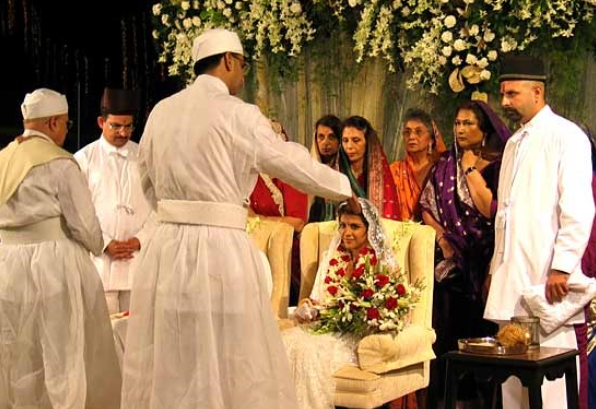
The Parsi Marriage and Divorce Act, 1936, governs marriages, divorces, and other related matters within the Parsi community in India. It outlines the requirements for a valid Parsi marriage, including the need for solemnization by a priest with two witnesses, age requirements, and prohibitions on marrying within certain degrees of consanguinity. The act also provides for divorce and maintenance of spouses, children, and dependents, and establishes a Parsi Matrimonial Court to handle related disputes.
☸️ 5. Parsi Marriage and Divorce Act, 1936
✅ Applicability:
- Parsis (Zoroastrians)
📜 Key Points:
- Ceremonial marriage (Ashirvad) is required.
- Registration is mandatory.
- Grounds for divorce:
- Adultery
- Cruelty
- Unsoundness of mind
- Desertion for 2+ years
- Non-consummation within 1 year
- Bigamy
- Grievous hurt or venereal disease
⚖️ Important Case:
🔹 Soonabai Pestonji v. Winfred Prest (1923)
Defined “Parsi” and clarified marriage eligibility under the Act.
Conclusion:
Marriage Laws in India are regulated by personal as well as generalized Marriage Acts. Court marriage registration demands a notice that must be delivered to the marriage registrar within one month of marriage. Supporting documents are also produced during this time as age proof, identity proof, address proof, and for fulfilling other sorts of legal purposes.
If the bride stays in a separate district, then a copy of the notice is sent to that district’s magistrate for a thorough investigation. The scrutiny status remains active for one month, within which any party involved in the marriage can object. The Registrar is entitled to declare any marriage as void if he feels the necessity to do so.
FAQs:
1: What are the different types of marriages recognised in India??
Answer: There are different types of marriages in India such as Hindu marriages under the Hindu Marriage Act, 1955; Muslim marriages under the Muslim Personal Law (Shariat) Application Act, 1937; Christian Marriage Act of 1872 which governs Christian marriages and civil marriages under the Special Marriage Act, 1954. Each of such categories is associated with its own legal provisions and stipulations.
2: What is the minimum age for marriage in India?
Answer: As per Indian marriage law, the legal age of marriage is 21 years for males and 18 years for females. These minimum age limits are applicable for Hindu Marriage Act, Muslim Marriage Law and Special Marriage Act among others.
3: How is a marriage solemnized under the Special Marriage Act of 1954?
Answer: Upon the registration of marriage notices, the parties to be married under the Special Marriage Act 1954 are required to provide the marriage registrar with a notice which is published for a period of not less than thirty days. After the notice period, if there are no valid objections, the parties can proceed to solemnize and register the marriage which will become legally binding.
4: Can a couple from different religions get married in India?
Answer: Yes, couples from different religions can get married in India under the Special Marriage Act of 1954. This act provides a legal framework for interfaith marriages, allowing couples to solemnize their marriage without adhering to the customs of their respective religions.
5: What are the grounds for divorce under the Hindu Marriage Act of 1955?
Answer: The Hindu Marriage Act of 1955 outlines several grounds for divorce, including adultery, cruelty, desertion, conversion to another religion, mental disorder, and failure to maintain for a continuous period. Additionally, the act allows for divorce through mutual consent after a period of separation.
COMPARATIVE TABLE
| Feature | Hindu Law | Muslim Law | Christian Law | Parsi Law | Special Marriage Act |
|---|---|---|---|---|---|
| Religious marriage? | Yes | Yes | Yes | Yes | No (civil only) |
| Polygamy allowed? | No | Yes | No | No | No |
| Age requirement | 21/18 | 21/18 | 21/18 | 21/18 | 21/18 |
| Divorce allowed? | Yes | Yes | Yes | Yes | Yes |
| Maintenance rights | Yes | Yes (iddat) | Yes | Yes | Yes |
| Public notice needed | No | No | No | No | Yes (30 days) |
LEGAL RIGHTS IN MARRIAGE
| Right | Explanation |
|---|---|
| 🏠 Right to residence | Wife has right to reside in marital home |
| 💰 Right to maintenance | Claimable by wife (and in some cases husband) under personal law or Section 125 CrPC |
| ⚖️ Right to divorce | Equal rights under most laws with specified grounds |
| 👶 Right to custody | Decided in the child’s best interest |
| 🏛️ Right to alimony | Permanent alimony and maintenance during or after divorce |
| 🛡️ Protection from violence | Under Protection of Women from Domestic Violence Act, 2005 |
| 🧾 Right to inherit | Depends on religion and type of marriage (especially in interfaith) |