Case Title: Kaustubh Khera v. State of Madhya Pradesh & Others
Citation: 2025:MPHC-JBP:21455
Bench: Chief Justice Suresh Kumar Kait & Justice Vivek Jain
Date of Judgment: May 7, 2025
This case is now a significant precedent on the scope of judicial review and the rights of probationary judicial officers in India.
Background and Facts
Kaustubh Khera, appointed as a Civil Judge (Junior Division) in the Madhya Pradesh Judicial Services on March 12, 2019, was discharged from service after more than five years of probation. His termination order, dated September 5, 2024, was based on an adverse recommendation by the High Court’s Administrative Committee, later ratified by the Full Court. The discharge cited his failure to satisfactorily complete the probation period, not any proven misconduct.
Khera challenged this decision before the Madhya Pradesh High Court at Jabalpur, arguing that the termination was punitive and based on unproven allegations, and that he was entitled to confirmation after three years of probation.
Key Allegations and Complaints
Multiple complaints were filed against Khera by the Chief Judicial Magistrate, Principal District & Sessions Judge, Bar Association, and Superintendent of Police. The allegations included:
-
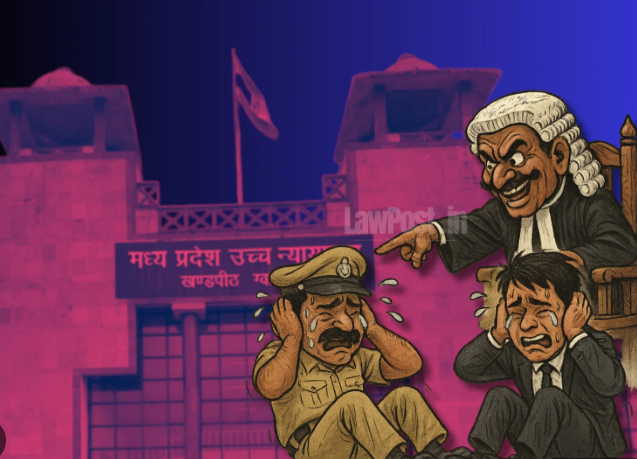
Compelling lawyers and police officers to perform sit-ups and touch their ears in open court as an apology in contempt proceedings.
-
Instituting contempt proceedings against Bar members and police, demanding public apologies.
-
Misbehavior with court staff, including female staff, verbal abuse, threats of physical assault, and chasing staff members.
-
Sentencing his own court peon to two months’ imprisonment and a fine of Rs 50 for alleged misconduct.
-
Leaving headquarters without permission.
A discrete inquiry by a District Judge reportedly found prima facie substance in these complaints.
Petitioner’s Arguments
Khera, appearing in person, argued:
-
His Annual Confidential Reports (ACRs) mostly showed “C” (Good) and “B” (Very Good) grades, with performance improving over time.
-
The complaints were fabricated by the Bar Association and court staff as retaliation for his strict discipline.
-
No formal departmental proceedings were initiated, and he only received the adverse material through the RTI Act after termination.
-
His probation exceeded the three-year statutory limit, so confirmation should be deemed automatic.
Respondents’ Contentions
The State, represented by Senior Advocate Aditya Adhikari, maintained:
-
The discharge was not punitive but a result of overall unsuitability during probation.
-
The order and related resolutions did not allege misconduct or use punitive language.
-
The High Court was entitled to consider all service records, including complaints, when assessing suitability.
-
There is no provision for automatic confirmation after three years; suitability and successful completion of probation must be expressly declared by the competent authority.
High Court’s Observations and Reasoning
The Division Bench of Chief Justice Suresh Kumar Kait and Justice Vivek Jain delivered a detailed judgment on May 7, 2025. Their findings included:
1. Nature of Discharge
The Court held that the discharge was not punitive. The order simply stated that Khera did not satisfactorily complete probation, without mentioning misconduct or using stigmatic language.
2. Discharge Simpliciter Doctrine
A probationer’s discharge does not become punitive simply because adverse material exists. Unless the termination is explicitly based on misconduct or carries a stigma, it remains a discharge simpliciter.
3. Use of Adverse Material
The Administrative Committee could consider all service records, including complaints and uncommunicated ACR remarks, to assess suitability. This does not convert the discharge into a punishment.
4. Judicial Precedents
The Court cited Supreme Court rulings:
-
SBI v. Palak Modi (2013): Suitability assessments during probation do not require disciplinary procedures.
-
Pavanendra Narayan Verma v. Sanjay Gandhi PGI (2002): Non-confirmation for unsuitability is not stigmatic unless based on misconduct.
-
Rajesh Kohli v. High Court of J&K (2010): Probationers can be discharged for overall unsatisfactory conduct without a regular enquiry.
5. No Right to Continuation or Automatic Confirmation
A probationer has no vested right to confirmation unless explicitly declared suitable. Rule 11(d) of the MP Judicial Service Rules, 1994, requires successful completion of probation and a permanent post for confirmation; mere lapse of time does not confer confirmed status.
6. Validity of Extended Probation
Although Khera’s probation exceeded three years, the Court found no prejudice, as his performance was under continuous review.
7. Performance Assessment
Khera’s ACRs showed mixed feedback. While he earned a “Very Good” grade in some years, other ACRs cited low quality of judgments, lack of evidence discussion, and excessive focus on non-judicial matters. For example, in 2023, despite high disposal rates, the quality of judgments was found lacking.
Judgment and Conclusion
The High Court dismissed Khera’s writ petition, holding:
-
The discharge was lawful, non-punitive, and based on overall unsuitability.
-
The High Court properly exercised its powers under Rule 11(c) of the 1994 Rules.
-
No violation of natural justice or service rules occurred.
-
There was no automatic confirmation after three years of probation.
Significance and Key Takeaways
-
The judgment reaffirms the High Court’s authority to assess and terminate probationary judicial officers for unsuitability, without the need for a full-fledged disciplinary enquiry, provided the termination is not based on proven misconduct.
-
Complaints or adverse material can be considered for suitability assessment but do not, by themselves, make the discharge punitive.
-
Judicial officers must maintain high standards of discipline and professionalism; the judiciary must be insulated from even the perception of errant behavior.
-
The ruling draws a clear distinction between punitive action for misconduct and non-confirmation due to unsuitability, thus safeguarding both institutional integrity and procedural fairness
“The impugned termination order simpliciter mentions that the petitioner was unable to carry out the probation period satisfactorily and successfully. No other reason is assigned. Therefore, the order cannot be termed to be punitive by any stretch of imagination.”
— Madhya Pradesh High Court, May 7, 2025